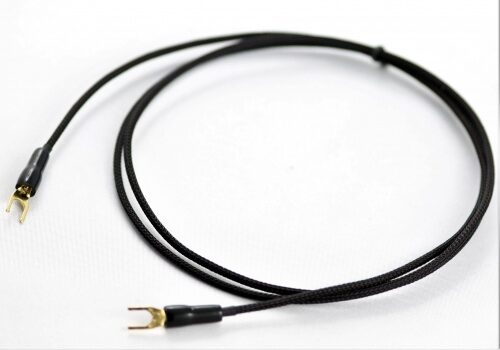
Discover how the right tonearm cable transforms your vinyl sound. Learn conductor materials, shielding design, and why audiophiles choose hand-assembled cables for superior clarity.
Why Your Tonearm Cable Could Be the Missing Link in Your Vinyl Setup
The signal traveling from your cartridge to the phono preamp is extraordinarily delicate — operating in the millivolt range and highly vulnerable to outside interference. A properly chosen tonearm cable at this point in the chain can be the difference between a noisy, compressed playback experience and the open, nuanced listening that vinyl is genuinely capable of. Many audiophiles invest heavily in turntables and cartridges, only to overlook the single component that connects them to the rest of the system.
Conductor material, shielding architecture, and connector quality all have a measurable influence on the final sound at this stage of the signal path. When these variables are optimized, the improvements tend to be immediate and tangible: quieter backgrounds, improved channel separation, and greater midrange clarity. Treating the cable as an afterthought almost always leaves performance on the table.
How Kácsa Audió Helps Audiophiles Find the Perfect Tonearm Cable Match
Kácsa Audió takes a notably hands-on approach to cable retail — handling assembly, testing, and technical consultation in-house rather than simply fulfilling orders. Their team works with each customer to identify a solution suited to their specific turntable, cartridge, and phono stage combination. The guidance offered is shaped by accumulated listening feedback, not just datasheet comparisons.
One of their most practical policies is the option to trial assembled cables at home, within your own system, before making a purchase decision. This removes the guesswork that typically surrounds cable upgrades and gives listeners a genuine basis for comparison. For anyone serious about vinyl, this kind of support — grounded in real-world testing — is rarely available through conventional audio retail.
Key Factors to Consider When Choosing a Tonearm Cable for Your Turntable
Conductor material is among the most consequential choices in tonearm cable selection. UP-OCC (Ultra-Pure Ohno Continuous Cast) copper delivers excellent signal continuity with minimal grain boundaries, making it a reliable option across a wide range of systems. Silver conductors, by contrast, offer lower resistance and are often favored in high-resolution setups where retrieving fine detail is the priority.
Shielding design deserves equal attention, given how susceptible phono-level signals are to RFI and EMI. A double-shielded construction provides meaningful protection in any listening environment that includes nearby electronics or digital sources. Connector termination — whether RCA, DIN, or a combination of both — must also align precisely with the inputs and outputs of your specific equipment, so confirming compatibility before ordering is always worth the extra step.
Emerging Trends in Tonearm Cable Technology Every Vinyl Enthusiast Should Know
Modern cable engineering has moved well beyond basic copper wire and off-the-shelf connectors. Multi-layer shielding — with some designs incorporating four discrete shielding layers — has become a practical benchmark for noise rejection in demanding listening environments. Rhodium-plated connectors, once associated exclusively with flagship-tier products, are now appearing across a broader range of offerings, valued for their corrosion resistance and long-term contact consistency.
Hand-assembled construction using components from established specialists such as Furutech and Neotech has become a defining characteristic of the premium tonearm cable segment. Unlike mass-produced alternatives, hand-terminated cables allow for tighter quality control at each connection point and can be configured to precise lengths and termination types. This shift toward purposeful customization reflects a wider movement in high-end audio — one where a tailored solution consistently outperforms a generic one.